Architecting deterministic execution environments: process lifecycle, memory trees, tool orchestration, OS-level sandboxing, and verifiable runtime governance. Directed by Yami Gopal.
Three interconnected subsystems: the execution harness, distributed swarm coordination, and hardware-enforced runtime governance.
Deterministic process execution, tool dispatch boundaries, memory context trees, and self-healing error recovery loops. Controls how models interact with state, compute, and external dependencies.
Applying Domain-Driven Design and Hexagonal Architecture to multi-agent swarms. Separating bounded contexts, managing asynchronous event sourcing, and cascading through tiered model capability ladders.
Containing tool execution at the operating system and hardware boundary. Restricting stdio-based MCP tools via native Linux seccomp/Landlock, attesting execution in hardware TEEs, and signing audit traces.
Interactive prototypes, compliance middleware, and runtime governance control planes built by the lab.
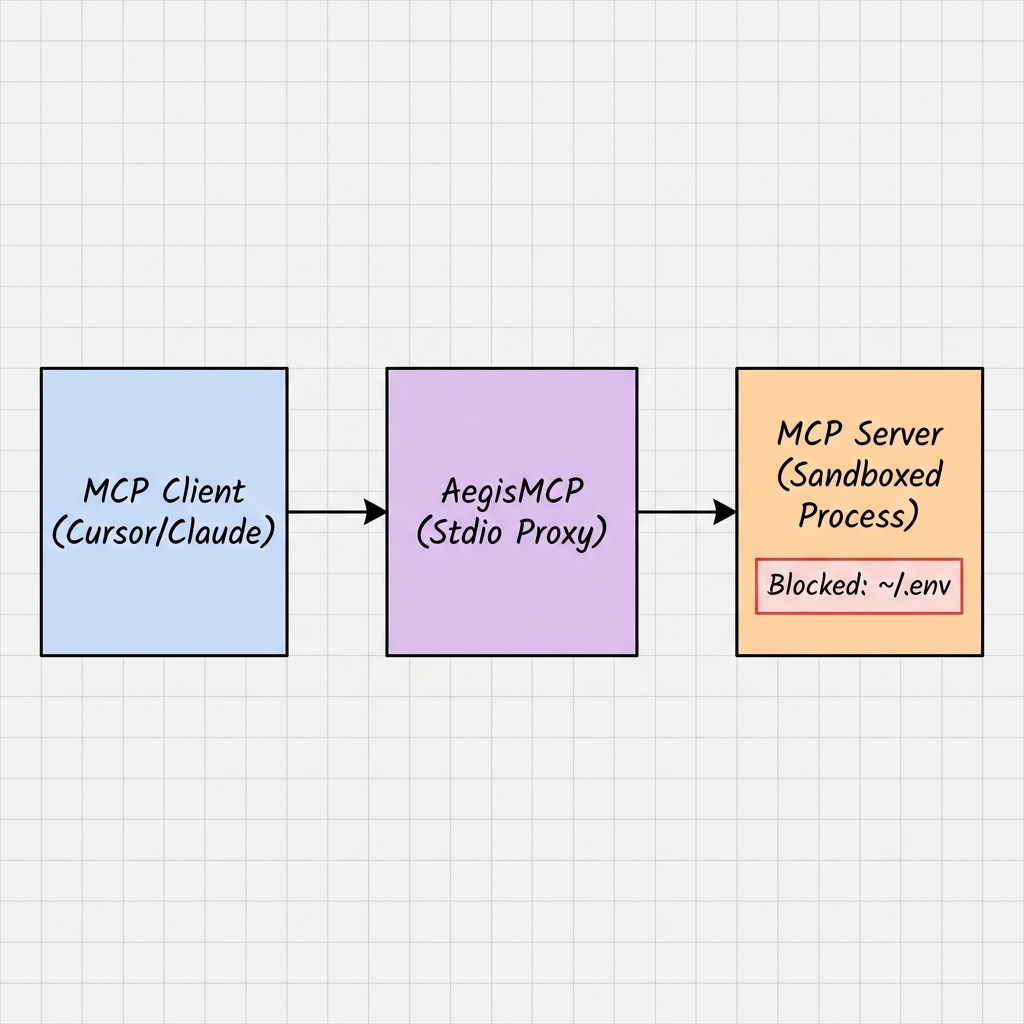
OS-native sandboxing proxy in Rust securing Anthropic's Model Context Protocol (MCP). Shields host filesystems and local sockets from prompt injection.
Inspect Architecture โ
Interactive hardware-enforced runtime verification. Watch an enclave intercept a 50,000 USDC transfer and enforce Article 14 multisig approval.
Launch Simulation โ
Real-time compliance API for conversational health agents. Sub-20ms latency boundaries, GDPR pseudonymization, and 100% crisis detection recall.
Read Case Study โ
Fleet governance console for autonomous agents featuring real-time compliance tracking, emergency kill switches, and execution telemetry.
View Live Dashboard โIn-depth architectural analysis on agent runtime isolation, domain-driven design, and model capability routing.
Most MCP integrations communicate over stdio, bypassing corporate network gateways. Here is how we contained prompt-injection exfiltration at the syscall level using Rust.
Read Technical Essay โApplying Domain-Driven Design and Hexagonal Architecture to build decoupled agent swarms that maintain deterministic state without corruption.
Read Technical Essay โOrchestrating model capability tiers for cost and latency optimization. Heavy reasoning models frame the problem; lightweight models execute.
Read Technical Essay โEarlier distributed pipelines, multimodal engines, and failure injection systems architected by the lab.
Synthetic probe execution, runtime failure injection, and automated model drift detection across production agent deployments.
Launch Live Canary โAutonomous scene segmentation, Whisper speech transcription, and GPU rendering queues for long-form video understanding and clip extraction.
Read Pipeline Architecture โDeterministic retry loops, dead-letter queues, and state synchronization across distributed worker nodes in n8n and Python.
View Orchestration Case Study โI direct Berlin AI Labs as an independent systems research lab focused on autonomous agent runtimes, kernels, and execution security.
With fifteen years of background designing carrier-grade distributed systems, high-throughput financial backends, and low-level software infrastructure across Europe, I focus on the hard engineering layer: how to make autonomous agents deterministic, isolated, and production-viable.
Available for Principal and Staff Systems Engineering roles, founding engineer opportunities, and high-impact technical advisory.
Direct access to Yami Gopal for Principal and Staff engineering roles, founding infrastructure discussions, and agent runtime architecture advisory.