Ever tried hiring a new bass player only to realize they don't know the difference between a minor seventh and a supermarket checkout beep? In the world of Agentic AI, bringing a new agent (or a new laptop) into your workflow usually feels just as chaotic. You clone the repo, and suddenly the agent is hallicinating rules, duplicating code, and ignoring your hard-earned TDD protocols.
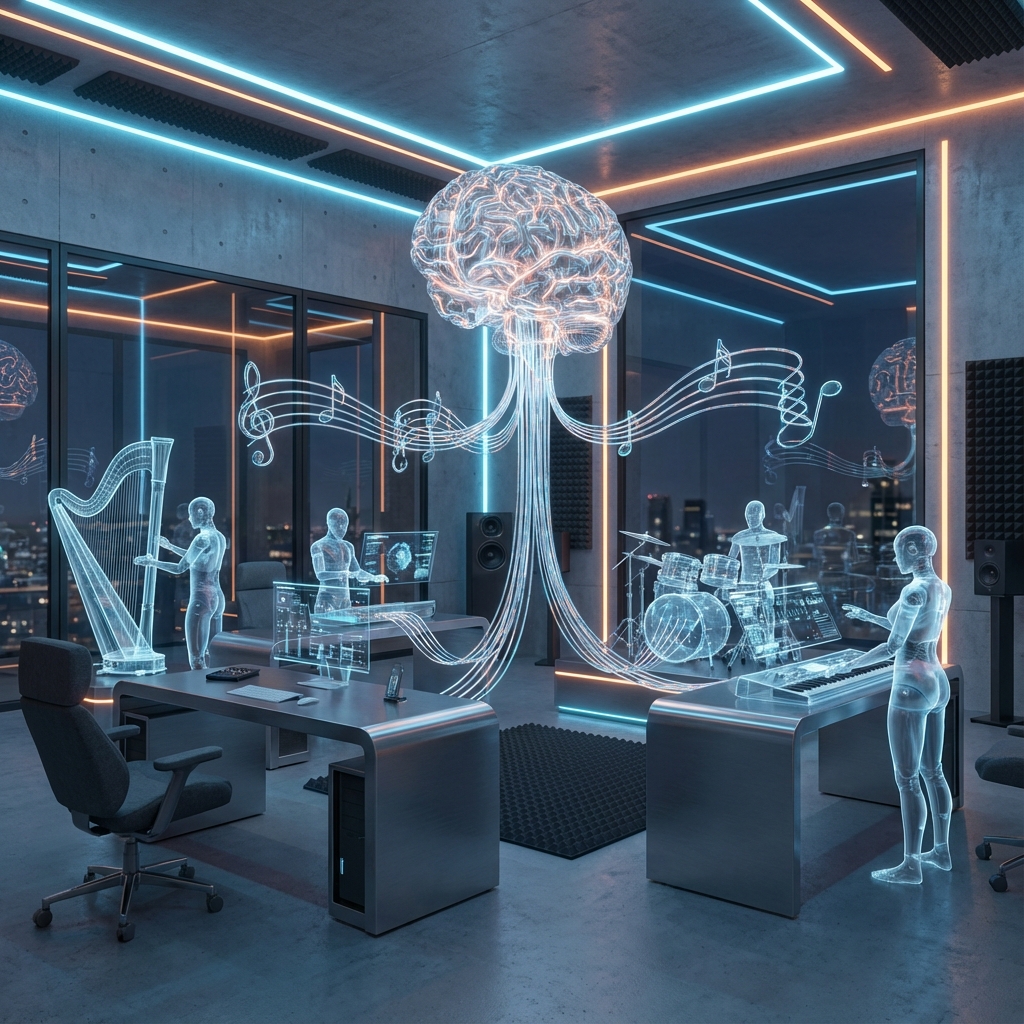
At Berlin AI Labs, we decided we were done "hand-coding" our infrastructure every time we switched machines. We've built what we call the "Zero-Touch Agentic Studio"—a plug-and-play architecture where every project is tethered to a single, global "Master Brain."
The Cacophony of Component Drift
When you're running a multi-service studio, code duplication is the ultimate vibe-killer. We had a CryptoService in one repo and a slightly different EncryptionUtil in another. When an agent was asked to build something new, it would just invent a third one. It was like having three different drummers in the room, all playing at slightly different tempos.
We needed a Source of Truth that was louder than the agent’s internal hallucinations.
The Master Score: One RULES.md to Rule Them All
Instead of having rules scattered across CLAUDE.md, .cursorrules, and GEMINI.md in every project, we did something radical: The Purge.
We consolidated every architectural standard, TDD protocol, and code quality gate into a single RULES.md file stored in a dedicated berlin-ai-infra repository. Now, whether I’m coding in ConvoGuard or InstagramReelPoster, there is only one Law.
## 🛑 THE REUSE LAW
Before building new logic, check the Microservices Catalog.
If a capability exists, you MUST reuse it.
Duplicating code is a critical failure.
The "Bootstrap" Hook: Plug and Play Engineering
The coolest part? It's now 100% portable. When I clone any project onto a new laptop, the agent sees a tiny "Architectural Anchor" in the README. It automatically runs a bootstrap-infra.sh script that:
- Clones the Master Brain into the parent directory.
- Purges any local "shadow rules" that might cause drift.
- Sets up IDE-specific pointers so Cursor, Windsurf, and Antigravity all sing from the same sheet music.
It’s the closest we’ve come to a "Zero-Touch" environment. You clone, you start the agent, and the agent installs its own constraints.
Live Service Discovery: The Studio Phonebook
But how does a project on my laptop know about a microservice running live on Cloud? We solved this by treating our Studio Service Directory as a live API.
Every time a service is verified, it registers its OpenAPI manifest with the directory. Our local agents can run a sync-catalog.sh script to fetch the latest "Phonebook," bridging the gap between local development and live production infrastructure.
Conclusion: Work Like a Musician, Code Like an Architect
You don't want to spend your time setting up wires and tuners; you want to play the music. By automating our development environment to this degree, we've freed up our "bandwidth" to focus on what matters: building AI that actually solves problems.
The Berlin AI studio is now a self-correcting organism. If an agent tries to drift, the "Enforcer" script catches it. If a new machine is introduced, the "Bootstrap" script tethers it.
We’ve finally reached the point where the infrastructure is invisible. And that’s when the real creativity starts.